General information, not legal advice. Rules change; check current requirements with the authorities or a qualified lawyer.
Kazakhstan is the largest economy in Central Asia and a growing link between China, Europe and the rest of the region. For North American companies, three sectors stand out: energy, transport and logistics, and digital technology. This guide summarises what official US and Canadian sources say about each, how business works on the ground, and the compliance checks that come with the market.
The market in brief
The U.S. International Trade Administration (ITA) describes Kazakhstan as Central Asia’s top economy, driven by large reserves of oil, gas, coal, uranium and other minerals, and as a gateway to over 500 million regional consumers. It lists the priority sectors for US firms as critical minerals and mining, energy, digital technologies, transport and logistics, and agribusiness. The United States ranked seventh among Kazakhstan’s trading partners in 2024.
Canada has its own ties. Global Affairs Canada calls Kazakhstan Canada’s largest commercial partner in Central Asia, with merchandise trade of almost $752 million in 2023. Uranium led Canada’s imports, and industrial machinery led its exports. Canada’s embassy in Astana covers Kazakhstan, the Kyrgyz Republic and Tajikistan.
The ITA is also clear about the difficulties: reform progress is uneven, and corruption and bureaucratic inefficiency remain challenges.
Energy
Energy is the backbone of the economy. According to the ITA:
- Kazakhstan has proven crude oil reserves of 30 billion barrels, and oil output averaged 1.76 million barrels per day in 2024, led by the Tengiz, Kashagan and Karachaganak projects
- around 80% of oil is exported, mainly through the Caspian Pipeline Consortium via Russia
- Tengizchevroil, whose partners include Chevron and ExxonMobil, operates the Tengiz field
- coal and gas produced 85% of electricity in 2024, and 65% of power plant equipment is over 20 years old
- renewable capacity reached 2,903 MW by December 2024, with a target of 10 GW by 2030
The ITA sees openings in upstream equipment and services, petrochemical projects such as the Silleno polyethylene plant, power plant upgrades, grid digitalisation and smart metering. It also points to projects financed by multilateral banks such as the EBRD, ADB and World Bank as a route in. Nuclear power is returning to the agenda, with small modular reactors under consideration.
Transport and logistics
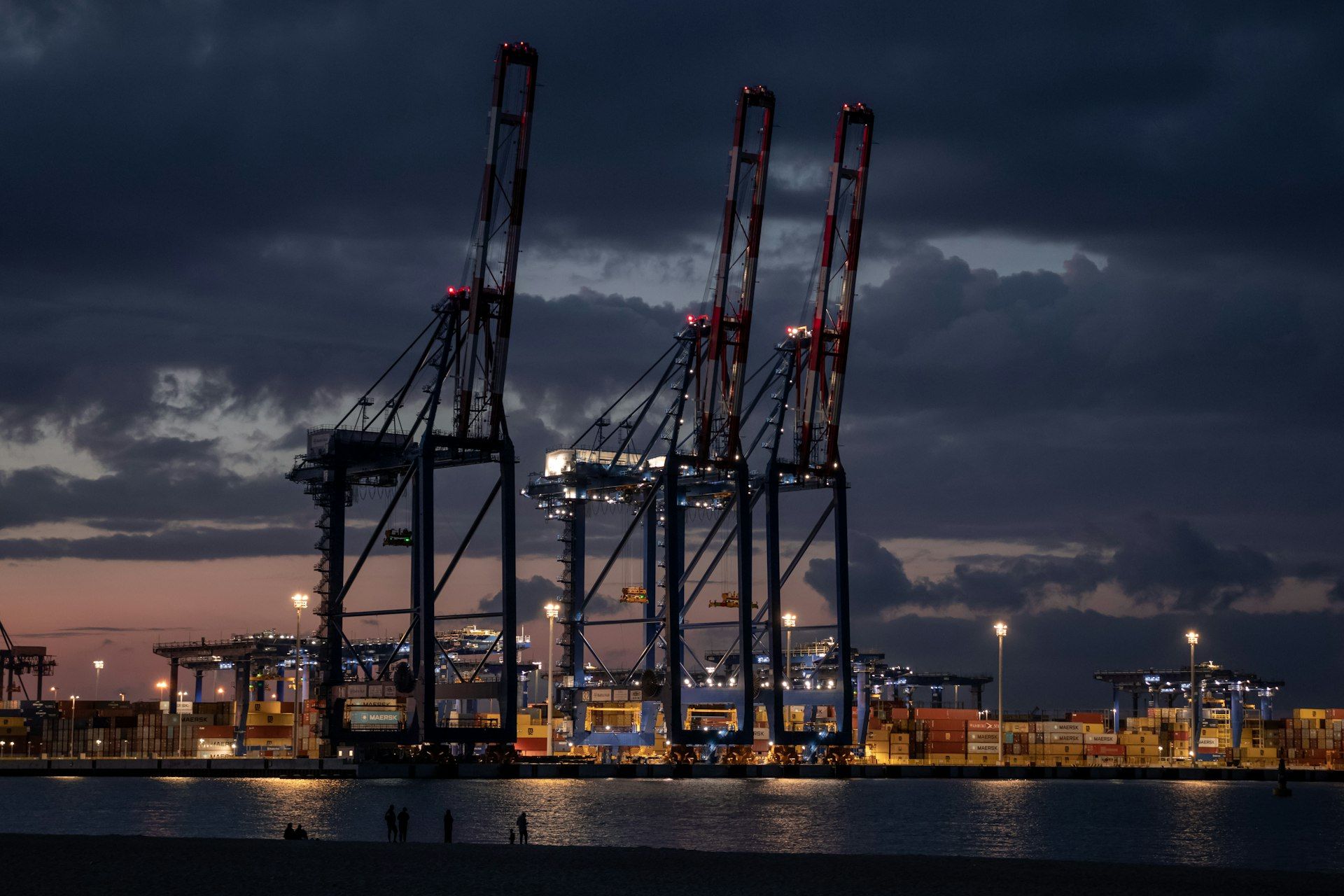
Kazakhstan sits on the overland routes between Asia and Europe, and the sector is growing fast. The ITA reports that:
- transport and logistics grew 23.1% in early 2025, with rail handling over half of freight
- container traffic on the Trans-Caspian Trade Route more than doubled in 2024
- modernisation of the Caspian ports of Aktau and Kuryk aims to boost throughput 1.5 times and triple container capacity by 2028
- US firm Wabtec signed a $4.2 billion deal for locomotives and diagnostics
- Class A and B warehousing is scarce, at 1.3 million square metres with vacancy near 1%
There are weaknesses too. Kazakhstan fell from 79th to 95th on the logistics performance index in 2024, which the ITA links to bottlenecks in ports, railways, warehouses and customs. The ITA names openings in rail signalling, port equipment, digital platforms, warehousing and airport projects, and flags risks including the rail operator’s monopoly and Chinese dominance in maritime projects.

Digital and tech
Kazakhstan is building a digital economy. The ITA notes 91% internet penetration and describes the Astana International Financial Centre (AIFC) as offering favourable legal and tax regimes. The U.S. State Department adds that the AIFC has its own court and arbitration centre based on English common law, independent of the national courts.
For people, the State Department notes that Kazakhstan introduced a “Neo Nomad” visa in 2024, allowing remote workers for international employers to stay for up to one year. On data, it says cross-border transfer of some data is possible only where the receiving country is judged to provide sufficient protection. Check data localisation rules early if you sell software or cloud services.
How business works on the ground
Official guidance highlights a few practical points:
- Entry. The ITA says US citizens can visit visa-free for up to 30 days, with no more than 90 days in any six-month period, but not for employment. Canadians should check the Government of Canada’s travel advice.
- Cities. Astana is the capital, but Almaty remains the main business hub.
- Language. Russian remains widely used in business. The ITA recommends qualified interpreters.
- Relationships. Meetings can be slow to schedule, and building trust takes time.
- Pricing and distribution. The ITA lists freight, import duties, the standard 16% VAT and high importer and distributor margins as key pricing factors, and advises using licensed customs brokers. Distributors expect strong after-sales support.
- Treaties. The US-Kazakhstan Bilateral Investment Treaty has been in force since 1994 and the double taxation treaty since 1996, according to the State Department.
Export controls and sanctions
Compliance needs serious attention. The State Department notes that Russia’s war against Ukraine has disrupted Kazakhstan’s trade, and that Kazakh businesses must take extra care when working with Russian partners or shipping through Russia.
For US exporters, the ITA explains that the Export Administration Regulations, run by the Bureau of Industry and Security, control dual-use items. BIS carries out end-use checks, publishes “red flags” and “Know Your Customer” guidance, and the government’s Consolidated Screening List brings together restricted parties from several agencies. Canadian companies have their own sanctions and export control obligations.
If your deal also touches the EU or UK, their sanctions rules may apply as well. Screen buyers, distributors and their owners, and check end use, before you sign. Do this with a qualified trade compliance lawyer.
How Mavericks Go helps
Mavericks Go takes companies into Kazakhstan and Central Asia: a market briefing and entry plan, introductions to local distributors, buyers and counterparts through Mavericks Connect, trade missions, a presence at the Mavericks Kazakhstan edition, and support after you land. Every client and counterpart is screened against EU, UK and UN sanctions lists, and every Go deal is screened against EU sanctions.
Official sources
- U.S. International Trade Administration: Kazakhstan, market overview
- U.S. International Trade Administration: Kazakhstan, energy sector
- U.S. International Trade Administration: Kazakhstan, transport and logistics
- U.S. Department of State: 2025 Investment Climate Statement, Kazakhstan
- U.S. International Trade Administration: Kazakhstan, business travel
- U.S. International Trade Administration: Kazakhstan, selling factors and techniques
- Government of Canada: Canada-Kazakhstan relations
- U.S. International Trade Administration: Kazakhstan, U.S. export controls