General information, not legal advice. Rules change; check current requirements with the authorities or a qualified lawyer.
Many Australians and New Zealanders spend time in Europe, and plenty want to work there. Visiting is easy. Working is a different matter, and the rules depend on the country, the job and your age. This guide explains the main ways in, from short visits to work permits and remote work. It is general information only: always check the rules of the country you plan to work in.
Visiting is not working
Australia and New Zealand are on the EU’s list of countries whose citizens do not need a visa for short stays in the Schengen area of up to 90 days in any 180-day period. That list is set out in Regulation (EU) 2018/1806. The European Commission explains that the 180-day period is a rolling window: you can enter as often as you like, but your total time in Schengen countries cannot exceed 90 days in any 180 days.
A visa-free visit is for tourism, family visits and short business trips such as meetings. The same regulation allows each country to require a visa from people who carry out paid activity during their stay, so do not assume you can take paid work on a visa-free entry. For stays over 90 days, each country runs its own national visa and permit procedures.
The new EU border systems
Two systems are changing how you cross the EU’s external borders:
- Entry/Exit System (EES). According to the European Commission, the EES has been fully operational across all Schengen countries since 10 April 2026. Non-EU travellers on short stays give their biometric data at the border, and their entries and exits are recorded electronically. You do not apply in advance.
- ETIAS. This is a travel authorisation for visa-free travellers to the Schengen area and Cyprus. At the time of writing (October 2026), the Commission says it is scheduled to start in the last quarter of 2026, with the exact date to be announced. Once it is live, travellers will apply online before their trip, and an authorisation will be valid for three years or until the passport expires.
Apply only through the official EU website or app when ETIAS opens. The Commission warns about unofficial sites that charge extra fees.
Working holidays
Working holiday schemes let young people travel and work for a limited time. New Zealand’s Ministry of Foreign Affairs and Trade says New Zealand has working holiday schemes with 25 European countries, which let young Europeans work in New Zealand for up to 12 months.
For the other direction, ask the embassy of the country you want to go to whether it offers a working holiday visa to New Zealanders or Australians, and on what terms. Age limits, length of stay and caps differ by country, and places can fill quickly.

Work permits and the EU Blue Card
Most longer-term jobs need a national permit. Rules differ between countries, so here is how a standard work permit works in Lithuania, according to the EU Immigration Portal:
- your employer usually registers the vacancy with the local Employment Service, then applies for a work permit or a decision that your job meets Lithuanian labour market needs
- that permit or decision is issued within 7 working days
- if your profession is on Lithuania’s shortage list, some of these steps fall away
- a national long-term visa lets you enter and stay for up to one year, and you can then apply for a temporary residence permit
- a decision on the residence permit is taken within 4 months at the latest, or within 2 months for an additional fee
The EU Blue Card. For highly qualified jobs, the EU Blue Card is a common route in most EU countries. Each country sets its own salary threshold. The EU Immigration Portal’s page for Lithuania (dated 1 April 2025) says:
- your salary must be at least 1.5 times the average gross monthly wage, or 1.2 times for jobs on the high value-added shortage list (the thresholds are updated quarterly)
- you need a higher education diploma, at least 5 years of equivalent professional experience, or for some ICT roles at least 3 years of relevant experience in the last 7 years
- the job offer must be for at least 6 months under a formal employment contract
- the card is normally valid for three years, and the fee is €160, or €320 for express issuance
Remote work and Ireland
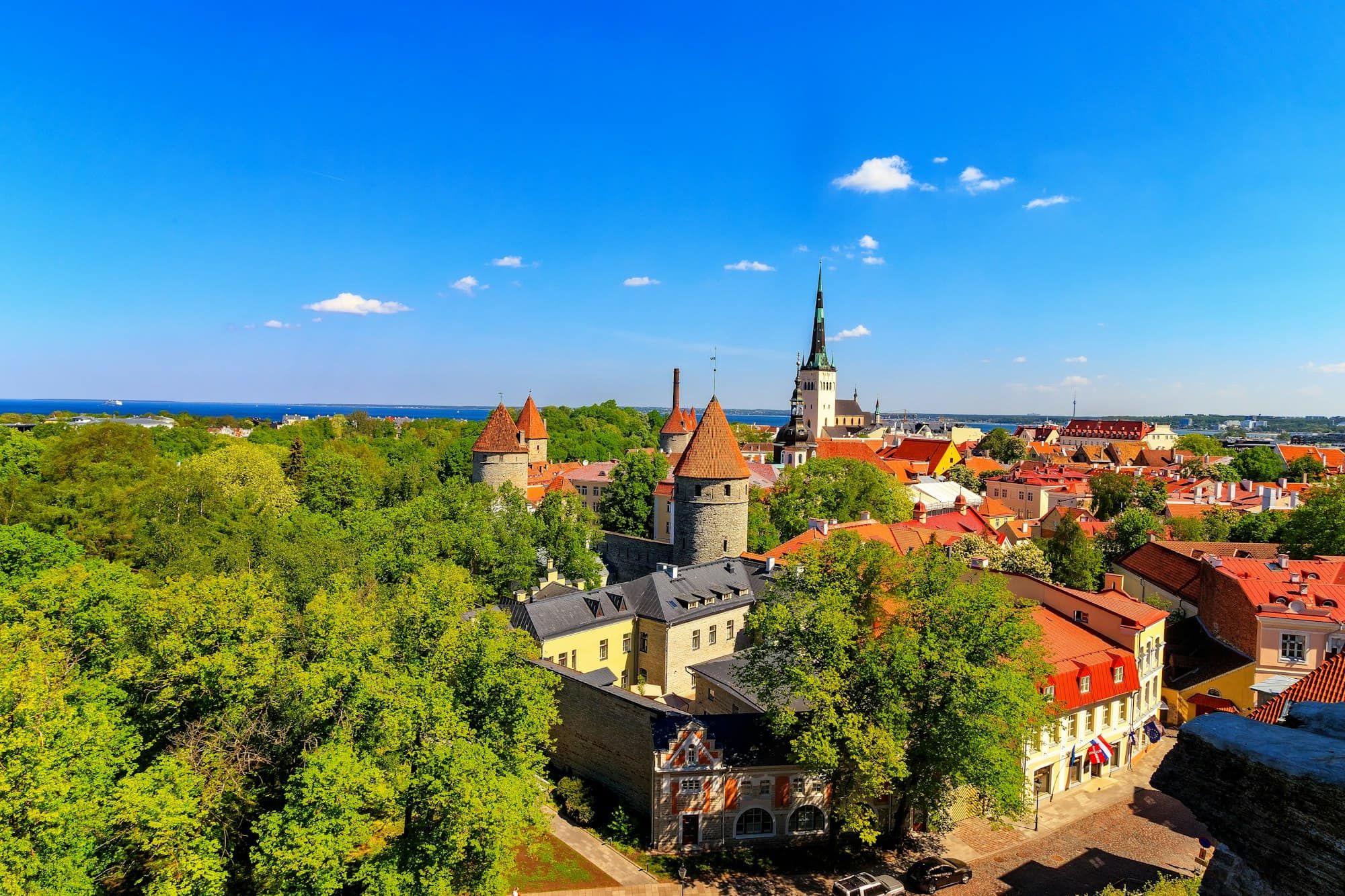
Remote work. If you keep working for an employer or clients outside Europe, some countries offer digital nomad visas. Estonia’s lets you live in Estonia and work remotely for up to a year. The official e-Residency FAQ gives an income threshold of €4,500 a month before tax, and notes that staying more than 183 days in a 12-month period makes you an Estonian tax resident. Check current figures with Estonia’s Police and Border Guard Board.
Ireland. Ireland is in the EU but does not apply the Schengen visa rules. It runs its own employment permits. Its Critical Skills Employment Permit is for occupations in short supply, such as ICT professionals and engineers. According to the Irish Department of Enterprise, Tourism and Employment, the minimum pay is €40,904 for listed occupations (with a relevant degree) or €68,911 for most other occupations, and you need a job offer of at least two years. The processing fee is €1,000.
Before you go
A few practical points apply almost everywhere:
- Tax and social security. Where you work and how long you stay can make you tax resident. Get advice in both countries.
- Qualifications. Some professions are regulated and need your qualifications recognised before you can practise.
- Timing. Permits take weeks or months. Do not resign or book one-way flights until your permission is confirmed.
- Family. Check whether your partner and children can join you, and whether your partner can work.
Rules change, so check with the embassy or immigration authority of your destination country, or a qualified immigration lawyer, before you make plans. No one can guarantee a permit: decisions rest with the authorities.

How Mavericks Settle helps
Mavericks Settle guides professionals and families through relocation: the right route for you, paperwork and applications, bank accounts, finding a home and settling in. Legal steps are handled by our regulated partner law firms in the UK, the EU and Kazakhstan.
Official sources
- EUR-Lex: Regulation (EU) 2018/1806 on visa requirements
- European Commission, Migration and Home Affairs: Main differences between the EES and ETIAS
- New Zealand Ministry of Foreign Affairs and Trade: Europe
- EU Immigration Portal: Employed worker in Lithuania
- EU Immigration Portal: EU Blue Card in Lithuania
- e-Residency of Estonia: FAQs about Estonia's Digital Nomad Visa
- Irish Department of Enterprise, Tourism and Employment: Critical Skills Employment Permit
- European Commission, Migration and Home Affairs: Visa policy